FUN · EFFECTIVE · FAMILY STYLE LEARNING
Nature Journaling

Nature journaling is a fun activity for people of all ages. It is a valuable tool for helping children to observe, ask questions, and draw connections about the world around them. It deepens learning, increases awareness, and heightens children’s appreciation for nature.  

What does a nature journal look like? Nature journals can be as different as the people keeping the journals and it is simple. 

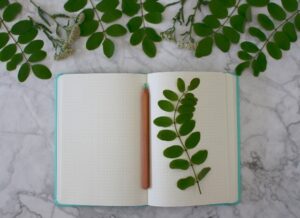
  • Start by getting some paper and drawing supplies. A spiral-bound sketchbook is an excellent choice to keep your nature journal in since the pages fold back to provide a flat surface for drawing. Many people also like to use a hardbound journal with blank pages. Still others find that using individual pages on a clipboard works well—especially for young students—since you can be selective about which pages you keep. These pages can then be bound together or kept in a 3-ring notebook. You may want to get a small case that holds pencils, pens, colored pencils, or watercolor pens that you can bring with you on your adventures. 
  • Spend time in nature. Get outside and take your journal and drawing supplies with you. Charlotte Mason was a big proponent of nature journaling and the importance of taking time to slow down. Nature journaling is not a quick, short assignment to be packed into an already over-booked school day. The primary goal is to take time to cultivate a deeper understanding and appreciation for the natural world—a connection to God’s creations around you. By keeping a nature journal, you can slow down, engage your senses, and be present in the moment while exploring and interacting with nature. 
  • Observe and record. With a nature journal, you get to decide what you will record in your journal and how you will record it. If you feel like drawing, do it. One significant advantage of drawing is that it keeps you focused on an object for longer and helps you see more than you otherwise would. If you feel like writing or making lists, do that. Record what you see and feel. Be as descriptive and detailed as possible. You might be fascinated by a tiny bug or the patterns found in the clouds and want to sketch them. Document the things you see. It is important to remember that your journal cannot be ruined. It is a record of your learning experience. Crossed-out words and imperfect drawings are frequently found in the best journals. The intent of the journal is not to produce a perfect, finished page, but to record the learning process.    


You might include lists of birds, plants, or flowers you have seen. You may write detailed descriptions of things you look at. There may be sketches and drawings of animal tracks, birds, flowers, or berries. You may include the impression of a leaf by rubbing a crayon over it, or pressing objects such as flowers. Make measurements. Add a quote, poem, or even a photograph. Be sure to add your personal thoughts, feelings, and reflections.  

Keeping a nature journal can help you take time to engage in the scientific process. Some great questions to ask yourself and write about in your journal include: 

  • I notice (observe)… 
  • I wonder (question)… 
  • It reminds me of (draw connections) … 
  • I think (hypothesize)… 
  • I’ve found (experiment & research) … 


The benefits of nature journaling are many. Nature journaling is a great way to develop a scientific mind (read more here). It fosters creativity, curiosity, and gratitude, while increasing observation and critical thinking skills. It nurtures a connection to nature and the outdoors. Most importantly, it invites children, as well as adults, to slow down, pay attention, be present, and experience awe and wonder.  

Charting Your Academic Course

RELATED ARTICLES

Social Studies for Older Students

Social Studies for Older Students

Charting Your Course for High School Social Studies
Language Arts for Older Students

Language Arts for Older Students

High School English - What Do We Do Now?

Is there something you would like help or more information on? Submit your questions here.

Do you have a parent help article that you want Simply Smart to consider publishing? Share by clicking here.

Translate »