FUN · EFFECTIVE · FAMILY STYLE LEARNING
When we talk about studying science, we often think about learning and memorizing facts. While gathering information is an essential part of becoming a good scientist, it is not the most crucial aspect. We admire great scientists not only because of their extensive knowledge in a particular subject, but because of how they think and approach problems.
A great scientist typically possesses a combination of traits and characteristics that contribute to their success. If we want our students to become good scientists, it is important to consider not only the facts we have them learn, but also the characteristics we want them to develop along the way. Here are a few characteristics you may want to consider.
Curiosity:
Albert Einstein – “I have no special talent. I am only passionately curious.”
Scientists are often inquisitive about the world and highly motivated to understand how things work. This leads them to ask important questions and seek answers through observation, experimentation, and analysis.
Critical Thinking:
Richard Feynman (quantum physicist) – “I would rather have questions that can’t be answered than answers that can’t be questioned”
The ability to think clearly, rationally and independently are often hallmarks of a good scientist. Scientists can carefully examine information, evaluate evidence, question assumptions, analyze data, consider various perspectives, and solve problems. Good scientists do not just accept information at face value, but observe, question, reflect, and draw conclusions based on evidence and logical reasoning.
Creativity and Innovation:
Albert Einstein – “Imagination is more important than knowledge. Knowledge is limited. Imagination encircles the world.”
Scientific advancements usually require thinking outside the box. Great scientists can devise new ideas, hypotheses, and perspectives to problems, which can lead to groundbreaking discoveries or innovative methodologies.
Persistence & Hard Work:
Thomas Edison – “I have not failed. I’ve just found 10,000 ways that won’t work.” “Genius is one percent inspiration, ninety-nine percent perspiration.”
A great scientist remains persistent in the face of setbacks, learning from failures, and constantly refining their approach. They work hard day after day. Many significant scientific breakthroughs take years, or even decades, to achieve. Great scientists are willing to commit to long-term goals, continuously learning and growing in their field.
Attention to Detail: Leonardo Da Vinci – “Details make perfection, and perfection is not a detail.”
Science requires precision and careful observation. Great scientists pay close attention to the small details that can make a big difference in the outcome of their work.
Communication:
Anne Roe (Harvard Clinical Psychologist) – “Nothing in science has any value to society if it is not communicated.”
Scientists need the ability to communicate findings clearly, whether through writing, presentations, or discussions. They keep careful and accurate notes that can be shared with and evaluated by other scientists.
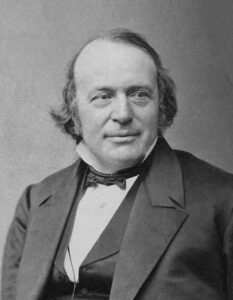
The following story about Louis Agassiz, one of the most renowned scientists of his time, is worth considering as we think about how to teach our students these characteristics. Louis Agassiz is recognized for his contributions to geology, glaciology and biology and is considered the father of the ice age. Not only was he a great scientist, but he was also known as a great teacher. He and his wife started a boarding school, so girls would have better educational opportunities (which later became Radcliff University, now part of Harvard). One of his greatest legacies was the emphasis he placed on learning through observation and hands-on experience. There are several versions of the story, and at this point, the story almost falls into the category of folklore. However, the story illustrates several hallmarks of Agassiz’ teaching style that proved effective in helping his students develop scientific minds.
Louis Agassiz … was approached by an obscure spinster woman who insisted that she had never had a chance to learn. Agassiz asked:
‘What do you do?’ he asked. ’I skin potatoes and chop onions.’
He said, ‘Madame, where do you sit during these interesting but homely duties?’
‘On the bottom step of the kitchen stairs.’ ‘Where do your feet rest?’ ‘On the glazed brick.’
‘What is glazed brick?’ ‘I don’t know, sir.’
He said, ‘How long have you been sitting there?’ She said, ‘Fifteen years.’
‘Madam, here is my personal card,’ said Dr. Agassiz. ‘Would you kindly write me a letter concerning the nature of a glazed brick?’
The woman took the challenge seriously. She read all she could find about brick and tile and then sent Dr. Agassiz a 36-page paper on the subject.
Back came the letter from Dr. Agassiz: ‘Dear Madam, this is the best article I have ever seen on the subject. If you will kindly change the three words marked with asterisks, I will have it published and pay you for it.’
A short time later there came a letter that brought $250, and penciled on the bottom of this letter was this query: ‘What was under those bricks?’ She had learned the value of time and answered with a single word: ‘Ants.’ He wrote back and said, ‘Tell me about the ants.’ …
After wide reading, much microscopic work, and deep study, the spinster sat down and wrote Dr. Agassiz 360 pages on the subject. He published the book and sent her the money, and she went to visit all the lands of her dreams on the proceeds of her work.
If we want our students to think like scientists, the way we teach should reflect that. An untrained mind sees the world and takes it for granted. A scientific mind, on the other hand, examines everything in the world with curiosity, attention to detail, and critical analysis. Being a good scientist is not reserved for those who have a particular talent in the area. It is open to anyone who will develop the mental discipline to think like a scientist. Our responsibility as teachers is not so much to spoon-feed our students information, but to provide our students with a foundation that helps them learn to think for themselves. As teachers, we must consider not only what, but HOW we are teaching.