FUN · EFFECTIVE · FAMILY STYLE LEARNING


Simply Smart’s Exploring Math
Preschool to Middle School
Even preschoolers can have fun doing algebra, fractions, multiplication and more!


 Start Young
Even very young children can have fun exploring advanced math concepts such as algebra, negative numbers, fractions, & more. Children’s brains are flexible and wired to absorb information rapidly, allowing them to learn quickly. They are naturally curious and love investigating the world around them. Allow children as young as preschool to explore mathematics.
 Use Manipulatives
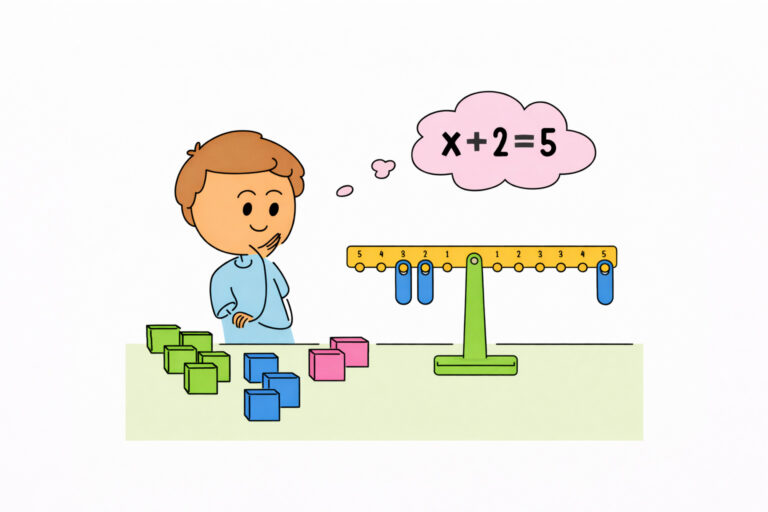
Children’s peak time to explore the world is generally before they even have the skills to read and write. Using manipulatives enables them to visualize and physically experience the world of mathematics while they still see it as fun and games.
 Teach Math Facts Separately
The speed with which children memorize their math facts often does not correlate with the speed they are ready to explore new mathematical concepts. Do not slow down a child’s opportunities to explore new math concepts because they have not memorized their math facts. As a child continues to explore concepts with manipulatives, it reinforces & speeds math fact memorization.
 Have Students Correct Mistakes
Mistakes reveal gaps in a child’s understanding or carelessness in their work. Ensure children understand what they did wrong, so they do not keep making the same mistake. By going back and correcting their mistakes, especially as they regularly review missed problems with a parent or tutor, it solidifies their understanding. They also develop discipline and focus, helping them to avoid careless mistakes in the future.
 Apply Math to Real Word Situations
We study math because it helps us in the real world. Math becomes meaningful as children see this correlation. Using math in everyday life (i.e. cooking, crafts, projects, working with money, etc.) reinforces the value of learning math. Word or story problems can also teach children to take mathematical concepts and use them to solve real-world problems.
 Do Lots of Review
Exploring math is fun, but it still requires repetition to retain information and improve speed and accuracy. Practice problems become increasingly important as children advance in math. For young children, using games and Simply Smart’s Erasable Playmats are a great way to review math concepts.