When children are young, they benefit from a hands-on math program that enables them to see and experience why concepts work, rather than just memorizing how to get the correct answer. With Simply Smart’s Exploring Math, even preschoolers can have fun doing algebra, decimals, multiplication, fractions and more. It is efficient, flexible and promotes mastery (read more here). We have seen amazing results with Simply Smart math, allowing children to get far ahead in math. So if Simply Smart math works so well, why do we transition to a traditional math program in middle school?
Let’s get right to the point. Eventually, it quits working.
As important as hands-on math is for younger students, at some point mathematical ideas get too complex for it to be practical to show with manipulatives. Once a child has a solid background in math, it becomes much easier to discuss the variations of problems than to demonstrate them.
When children are young, using Simply Smart’s Erasable Playmats is extremely effective at helping children to visualize and master math algorithms, providing a solid foundation for more complex math later on. However, once children solidly understand the math algorithms and can consistently do them quickly and correctly, it is time to move on. As children get older, it becomes increasingly important to spend more time applying math to varied circumstances, using different formats.
Although not an effective teaching tool with younger children, more mature students need the rigorous discipline and repetition of more intense, daily math practice prior to doing algebra and calculus.
What Math to Transition to in Middle School?
Over the years, we have tried many different programs, and Saxon keeps floating to the top. It is the best option we have found for advanced math. While we found Saxon ineffective for home-schooled students in elementary school, it is great for older students. Here are some benefits of using Saxon Math in later grades:
Incremental Development (small steps): Instead of teaching an entire unit on one topic and then moving on, Saxon introduces one small concept at a time. This is especially helpful for students who struggle with math anxiety. Students practice that new concept immediately. They are not overwhelmed by too much new material at once. Concepts build gradually, like stacking bricks.
Constant Review (spiral approach): This is the hallmark of Saxon. Every lesson includes problems from yesterday’s lesson, last week, & months ago. Instead of learning fractions for three weeks and then forgetting them, students keep practicing them all year. It’s based on what cognitive scientists now call “spaced repetition.” Students don’t just “get it once” — they use it repeatedly until it becomes second nature. This strengthens long-term retention and builds confidence.
Strong Skill Foundation: Students develop a solid foundation emphasizing mental math, computational accuracy, and automaticity.
Predictable Structure: Each lesson follows a familiar rhythm. This consistency helps students feel secure and reduces cognitive load. Lessons include warm-up/fact practice, lesson instruction, guided examples, a practice set (problems practicing the new concept taught in that lesson), and a problem set (problems reviewing all the concepts taught so far in the book).
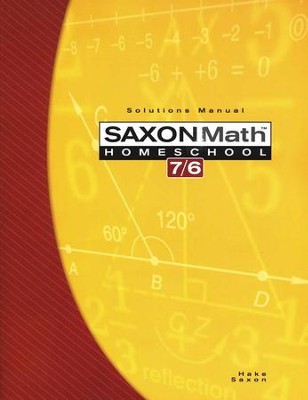
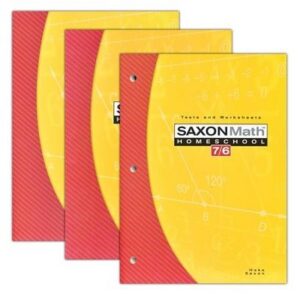
We found moving directly into Saxon 7/6 after completing Simply Smart’s Exploring Math is ideal, although some students have jumped directly into Saxon 8/7. If switching from a different math program, make sure your child feels comfortable with the long addition, subtraction, multiplication and division algorithms before starting Saxon 7/6. They should also feel comfortable with performing operations with decimals. If your child is already in pre-algebra or beyond, take a placement test to assess which Saxon Math book is right for them. Make sure your child has a solid foundation in math before starting Algebra I.
Our children usually start Saxon 7/6 in 3rd or 4th grade, which gives them an extremely solid math foundation and puts them well ahead of public-schooled children when they start high school. However, this is not necessary (read our blog discussing factors to consider when charting your child’s math course). Saxon 7/6 is traditionally considered 7th grade math (or 6th grade for advanced students).
Tips for Switching to Saxon
The following tips may be helpful:
Take a Slower Pace If Needed: Switching to Saxon may initially stretch your child’s attention span, especially if they are younger. For some of our children, we started by doing a partial Saxon lesson each day (or a few days a week) and then gradually increasing the number of problems until they could complete a full lesson each day.
Buy the Solutions Manual: In addition to the Saxon textbook for each grade, we also buy the solutions manual. The solutions manual contains answers to all the problems in the lesson (including warm-up, lesson practice, and mixed practice exercises), as well as written explanations of how each answer was obtained. This is a lifesaver for students correcting their own work (or parents needing a refresher on how to complete problems). However, Chat GBT also usually has fairly good explanations, so if you are not needing explanations for many problems (and your child does not start usign Chat GBT to solve problems for them), this can also be used.
Tests & Other Materials Are Optional: Saxon also offers additional tests and other materials for each grade level. These are optional, and we have never actually used them.
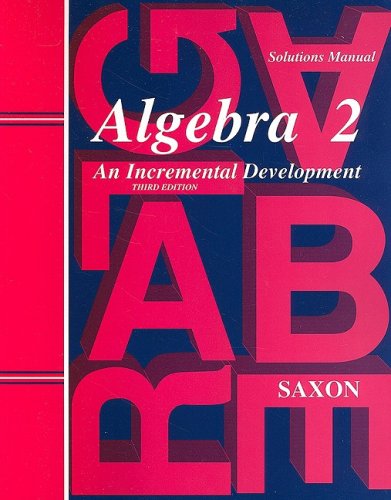
Using a Calculator: It is critical for young children to understand foundational math concepts and automate their brains. Doing math without a calculator ensures children understand how to get the correct answer, helps them to recognize if the correct answer is produced and allows them to do math faster in their head. For these reasons, we do not allow our children to use a calculator until Saxon Algebra II (with the exception of square root problems in Algebra I). However, some parents allow the use calculators in Algebra I.
Odd/Even Problems: Saxon is designed so the odd and even problems review the same concepts. As a result, some people will only do the odd problems, or the even. We have our children do all the problems so they develop greater accuracy, improve their speed, focus and ability to plow through large amounts of problems. However, if your child is quickly and consistently getting all the problems correct in each lesson, you may want to consider switching to doing only odd or even.
Outschool & Tutors: If you are not able to help your child with math, consider finding a friend or tutor to help your child. You can hop on Outschooland get on demand tutoring, or enroll in live group classes on that provide teacher help and support. Saxon Math Tutors is another option some have used.
Nicole the Math Lady: We use this online subscription to help our children with Saxon math, and you may want to as well. The subscription must be purchased in addition to buying the Saxon textbook. The online subscription is helpful because it enables children to work independently and saves parents time and stress.
Nicole provides pre-recorded videos for each Saxon lesson that make concepts easier to understand (several of these videos are also available for free on YouTube).
Nicole’s subscription provides online grading, which instantly lets a child know if they got a problem correct or not & provides parents with progress reports. As a result, children can check their own work & try again to get the problem right on their own. If the child still cannot get the problem correct, it makes it easy for parents to review missed problems with their child.
Other programs also provide videos for Saxon math lessons. DIVE Math, for example, provides video lessons for Saxon that we have successfully used in the past. These video lessons are good, but we found their online interface to be much less user-friendly than Nicole’s, so we now stick with her subscription.
Notes About the Saxon Books
Both Saxon 8/7 and Algebra ½ are equivalent to Pre-Algebra. Students do not need to do both unless they are struggling and need extra repetition. We use Math 8/7 and then go directly to Algebra I.
Saxon typically does not use a separate geometry book, although they recently have come out with an optional Geometry book. Geometry is integrated into all the Saxon Math books. If you are interested in looking at a traditional geometry textbook, you might look at Harold Jacobs Geometry.
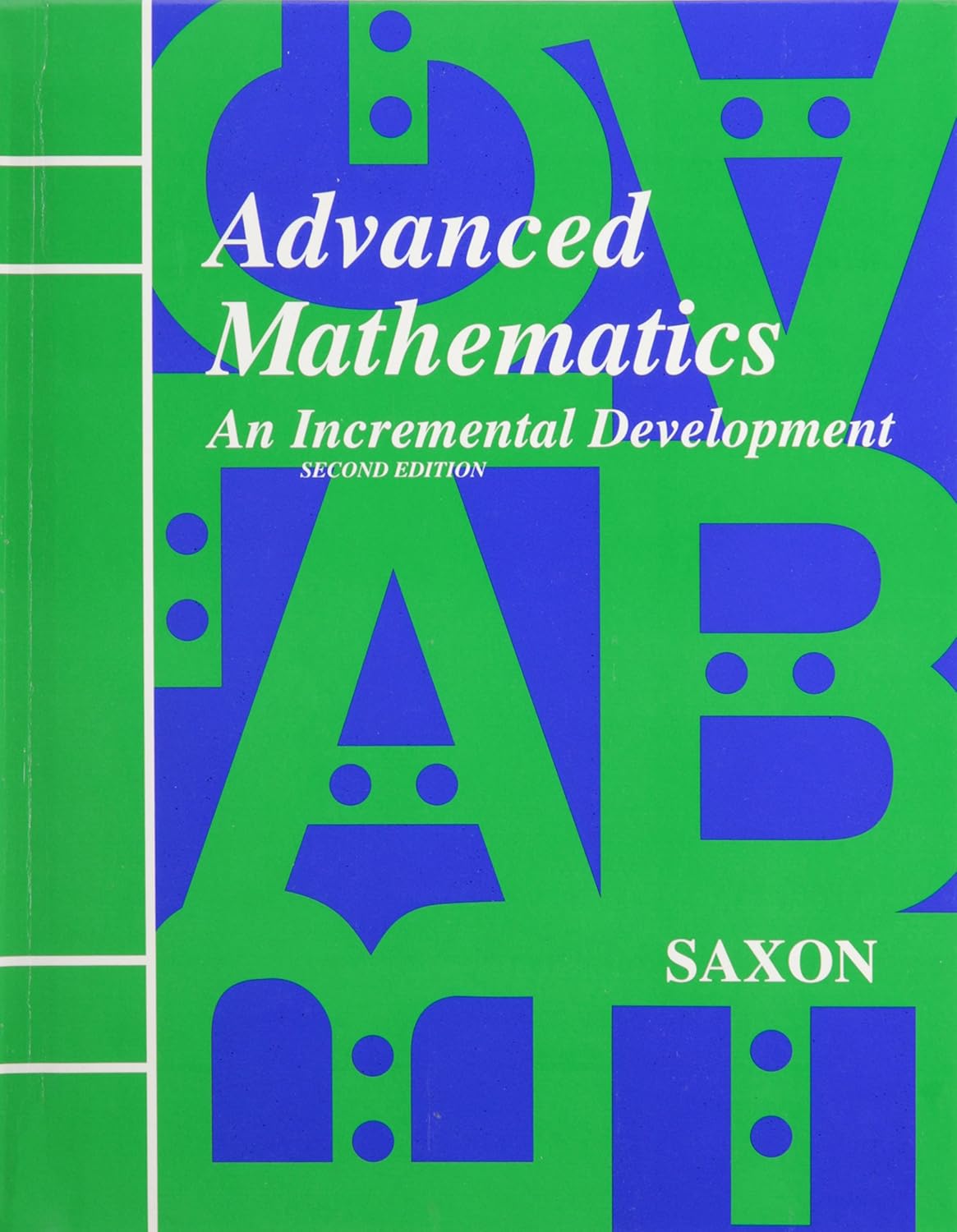
Saxon Advanced Math is the equivalent of Pre-Calculus. It integrates higher-level topics across algebra, geometry, and trigonometry and bridges the gap between Algebra 2 and Calculus.
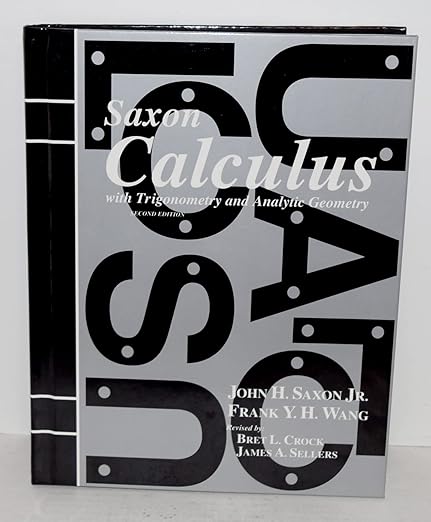
There are two AP Calculus exams (AB & BC). Saxon Calculus provides a strong foundation for the first AP Calculus exam (AB), and covers most of the concepts in the second AP Calculus BC exam (so you would need to supplement Saxon Calculus with other study material to be prepared for the BC exam).
For advanced math courses, such as calculus, you may want to consider having your child take the course at a local community college (or college offering online courses) so they get college credit. We use Saxon through pre-calculus and then have our kids take calculus through a college instead.
Putting Saxon Math on a High School Transcript
In Saxon Math, you are doing five years worth of math work in only four Saxon books. Below illustrates the Saxon Math sequence compared to a traditional sequence:
Saxon Sequence
Traditional Sequence
Algebra I
Algebra I
Algebra II
Geometry
Advanced Math (Precalculus)
Algebra II
Calculus
Pre-Calculus
Calculus
How do you handle that on a transcript? There are a few ways to deal with this:
1. List the actual Saxon course titles:
Saxon Algebra I
Saxon Algebra II
Saxon Advanced Math
Calculus
Include a statement that says “Geometry concepts are integrated throughout Algebra I and II” after listing the courses. Most colleges are familiar with Saxon and understand this structure.
2. Use traditional transcript titles (this is the most common method).
Algebra I (Algebra I = Saxon Algebra I)
Geometry (Geometry= Geometry units completed within Algebra I and II)
Algebra II (Algebra II= Saxon Algebra II)
Pre-Calculus (Pre-calculus= Saxon Advanced Math)
Calculus (Calculus = Saxon Calculus)
This method makes transcripts easier for admissions officers to scan quickly. This signals full geometry coverage without implying a traditional geometry textbook.

 When children are young, they benefit from a hands-on math program that enables them to see and experience why concepts work, rather than just memorizing how to get the correct answer. With Simply Smart’s Exploring Math, even preschoolers can have fun doing algebra, decimals, multiplication, fractions and more. It is efficient, flexible and promotes mastery (read more here). We have seen amazing results with Simply Smart math, allowing children to get far ahead in math. So if Simply Smart math works so well, why do we transition to a traditional math program in middle school?
 Over the years, we have tried many different programs, and Saxon keeps floating to the top. It is the best option we have found for advanced math. While we found Saxon ineffective for home-schooled students in elementary school, it is great for older students. Here are some benefits of using Saxon Math in later grades: