FUN · EFFECTIVE · FAMILY STYLE LEARNING
The Importance of Play

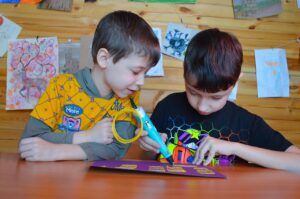
Watch children and you will see them play. Even before a baby can crawl, they lie on their back and play with toys dangling over their crib. Once they can crawl, they open kitchen cupboards and play with the pots and pans.  Kids are notorious for dressing up in anything they can get their hands on. They are obsessed with stacking and building. Blankets are pilfered to make elaborate forts. Cardboard boxes are transformed into all kinds of things. Holes are dug in backyards. Sticks and leaves are gathered into priceless little collections. 

Play is a state of mind. The characteristics of play are related to motivation and mental attitude, rather than the behavior or action itself. It is important to realize that fun is a feeling, not a specific activity. We refer to this as the “state of play. 

Understanding the nature and importance of play is especially vital in today’s world given the ever-increasing restrictions our culture places on children’s play. As children spend more time in adult-directed and highly restrictive activities, their physical, mental, social, and emotional development can be stunted. Safety concerns, parental anxiety, and current social norms are limiting the free, self-directed (and admittedly, sometimes risky) ways that characterized children’s play in the past. Keeping children safe is a fundamental parental responsibility. However, parents need to ensure that they provide their children with abundant, meaningful opportunities to play. 

Here are some ways to characterize the state play: 

  • Play is enjoyable (joyful) and pleasurable. Play involves active, engaged, and thinking minds. 
  • Engaged players lose awareness of time, space, and their surroundings. 
  • Play is often self-chosen and self-directed. 
  • Play is generally intrinsically motivated. 
  • The focus of play is on the process rather than on the result. 
  • Players use objects, actions, and ideas to represent real-world actions. 
  • Play involves experimentation, making hypotheses, and testing them—players learn by trying different approaches to solve a challenge. 
  • Play is imaginative and creative. 
  • Play is conducted in an alert, active, but relatively non-stressed frame of mind. 


So why do we care about play? Play helps children learn faster and more effectively. Here are some of the benefits of learning through play: 
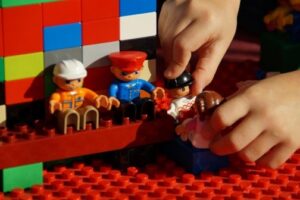
 

  • Deepened understanding, not just memorization
    Play invites experimentation. When learners test ideas, make mistakes, and try again, concepts stick because they are experienced, not just heard. 
  • Stronger problem-solving and critical thinking
    Games and imaginative scenarios naturally pose challenges: What happens if I do this? How else could this work? That builds flexible, creative thinking. 
  • Better attention and motivation
    Play triggers curiosity and intrinsic motivation. People focus longer when they want to be there, rather than being forced. 
  • Transfer of knowledge
    Because play often mimics real-world situations, learners are more likely to apply what they have learned in new contexts. 
  • Language and communication growth
    Whether it is storytelling, role-play, or cooperative games, play encourages explanation, negotiation, and storytelling — all great for cognitive development. 
  • Emotional safety and confidence
    Play creates a low-stake environment. It is okay to fail, which reduces anxiety and builds self-confidence. 
  • Emotional regulation
    Games teach learners to handle frustration, excitement, disappointment, and patience — essential life skills. 
  • Joy and positive associations with learning
    When learning feels good, people are more likely to keep learning. Play builds a lifelong positive relationship with curiosity. 
  • Empathy and social connection
    Collaborative play requires perspective-taking, cooperation, and understanding others’ feelings. 
  • Sense of autonomy and agency
    Choosing how to play and how to solve problems gives learners ownership, which strengthens self-esteem and emotional resilience. 
  • Play integrates thinkingfeeling, and doing. That combination makes learning more meaningful and effective. 


When you are planning school, think about how you are going to incorporate play. Remember, the more a child plays, the more effective their learning will be. 
Home as the Center of Learning

RELATED ARTICLES

Social Studies for Older Students

Social Studies for Older Students

Charting Your Course for High School Social Studies
Language Arts for Older Students

Language Arts for Older Students

High School English - What Do We Do Now?
Saxon Math For Older Kids

Saxon Math For Older Kids

Tips for Successfully Transitioning

Is there something you would like help or more information on? Submit your questions here.

Do you have a parent help article that you want Simply Smart to consider publishing? Share by clicking here.

Translate »