FUN · EFFECTIVE · FAMILY STYLE LEARNING
Reality: Education Happens Anywhere
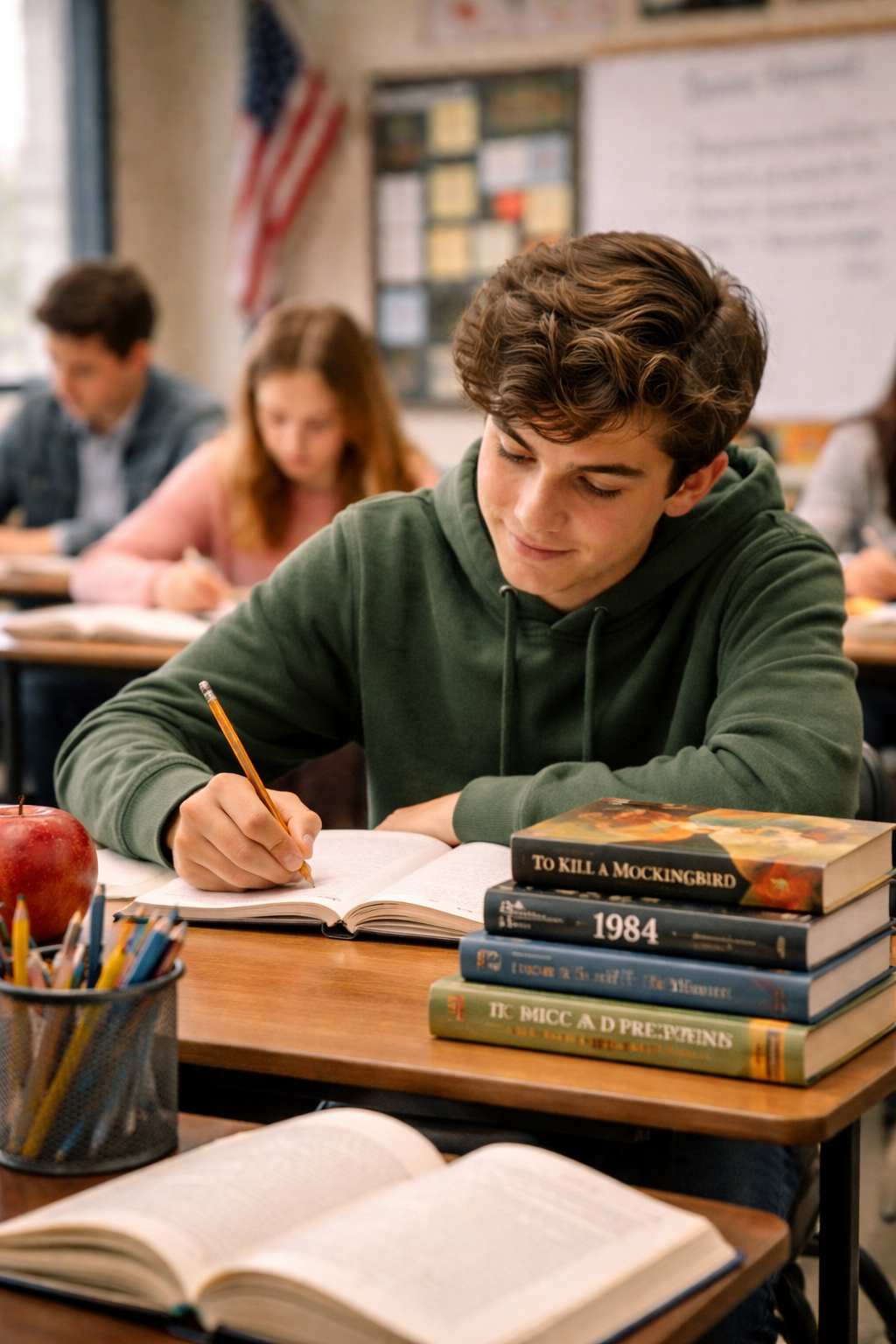
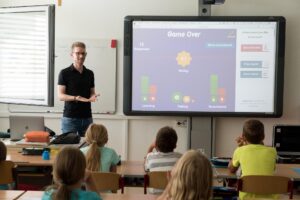
I happen to get a real kick out of organizing spaces. It brings me a lot of joy. So, one of the first things I did when I decided to homeschool was set up our very own little schoolroom. We had a great space with desks, bookshelves, bulletin boards, wall charts, and every manner of school supply. I loved it! ….And we used the classroom–SOMETIMES.
On the first day of homeschool, we met there, said the Pledge of Allegiance, and spent a few hours at our desks. The time spent in the schoolroom decreased from then on until it became more of a library or resource center than a classroom. The kids found it much more relaxing to do their work plopped on the sofa, stretched out on the carpet, or even sitting at the kitchen table. I got rid of the cute desks I had acquired and replaced them with nice book boxes for each child. They used them to keep their books, notebooks, pencils, and everything else they might have previously stuck in a desk, but it was portable.
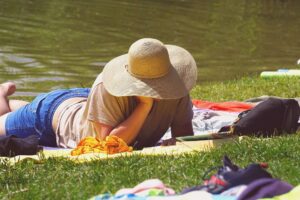
The brilliance of the book box idea became apparent when I realized the kids not only did schoolwork all over the house, but also outside. For example, it was problematic that only two of my children were taking piano lessons, but I had to take all six kids with me. Problem solved. When the kids climbed into the van, their school crates went with them. They had everything they needed to make their waiting time very productive. If the weather was good, we waited at a nearby park, and the grass became their schoolroom. Our family took a lot of road trips, sometimes spending weeks at a time at a grandparent’s house. With their trusty school crates in tow, grandma’s house became their school.
Flexibility and portability are important side benefits of homeschooling. The world changes when education is not confined to the same four walls every day. It changes even more when school stops being a structured block of time and learning becomes fully integrated into everyday life. In the real world, soccer practices, music lessons, enrichment classes, and outings take substantial blocks of time in a child’s day. School doesn’t get cancelled for all of those interruptions. It happens in the spaces in-between. Children read while driving back and forth. They use their notebooks to work on writing assignments. Since all of life is learning, a child’s school day consists of all their waking hours, and their classroom is wherever they happen to be.
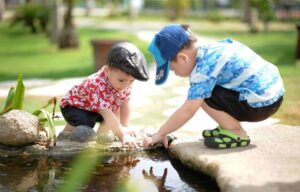
The saying “the world is your classroom” may sound cliché, but it is so true. Even the best-organized school rooms are confining. Get outside. Enjoy nature. Go out on a beautiful day to read a book. Take field trips and see things first hand. On any particular day, your classroom might be the library, a park, the grocery store, a mountain trail, someone else’s house, or even a dentist’s office. When education and life blend together, the sky is the limit. School can happen in a classroom, but it does not have to.