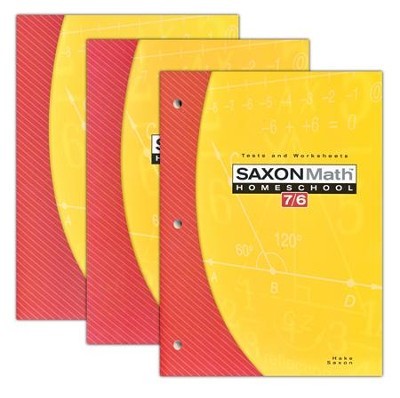
There are many excellent curriculums carefully designed to teach in a logical, meaningful way. As a home educator, the problem was rarely finding good materials. Over the years, I used many excellent curriculums. However, it soon became evident that, although well-written, they were intended for a very different setting than mine—a traditional school classroom.
Here is what a traditional classroom looks like:
- 150+ full days of school per year, starting at age 5 or 6
- 45-60 minutes of math per day, 5 days a week
- Often large classes with one age group of children, all born in the same school year
- A full-time, paid teacher whose sole responsibility is to teach the class
Here is what home-centered learning looked like in our home:
- 360 days per year, starting from birth, with variable/minimal days looking like a traditional school
- Very short periods of uninterrupted time (in my case, I could rarely make it through a lesson without having to stop and change a diaper, check dinner, etc.)
- Multiple kids spanning a wide range of years (in my case, 6 kids spanning 10 years)
- A teacher/parent who is unpaid and has many other simultaneous responsibilities
I had six children and re-creating a traditional school setting just was not going to happen. Further, even if I could create a classroom, it would not have taken advantage of the many benefits of teaching at home. We spent many years toggling between “unschooling,” which had many unique benefits, and the heavy-duty, college-prep study required so that my kids would be ready for college. We homeschooled through high school. All six kids graduated from a university (the majority with scholarships), and several went on to obtain advanced degrees. From an academic viewpoint, we all lived “happily ever after,” but it was a rough and frustrating road.
During those homeschool years, it became evident that I needed a simple program that looked like this:
- Not dependent on completing a full book each academic year
- Required minimal direct teaching and included lots of student-directed learning activities
- Had maximum flexibility, allowing concepts and skills to be presented in various orders, at various speeds, to match the child’s interests and needs with minimal prerequisites
- Suitable for multiple ages, pre-school through junior high, at the same time. Not age or grade-level based
- Provided concrete, experiential learning (for math, developing a high level of number sense and mathematical reasoning before focusing on rote memory or working algorithms)
- A “grab and go” program, requiring little or no preparation
- Was not dependent on a child’s reading or writing ability; could easily be adapted for children with learning disabilities
- Provided a single resource identifying all the concepts and skills needed to master the subject and an easy system for tracking progress (a progress chart for each child)
- Fun and engaging activities, making learning an integrated part of life, rather than drudgery; providing a balance between “play” and repetitive mastery
The Simply Smart program is what I wished I had when I was teaching my kids. It is designed to help parents teach in their unique home situation – whether homeschooling or supplementing public education. It assists parents in shaping their child’s perceptions about learning by creating a fun and stimulating home environment that clearly presents concepts, making it easy to ensure there are no gaps in their child’s education.