FUN · EFFECTIVE · FAMILY STYLE LEARNING

I like to present the ideal—the way things “ought to be” or the way I wish things could be. However, discussing ideals can be dangerous, or at least discouraging, when not balanced with a realistic picture.
I sent an early version of the article I wrote, Erasing the Line Between School and Play, to my daughter, who homeschools her nine children. The article extols the virtues of a fun, play-based education. I got the following rebuttal back. It was important enough that I will post her response:
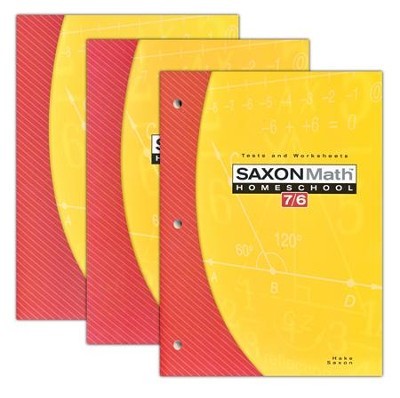
I think making learning fun is critical, and mom, you were great at doing that. However, there were plenty of school activities that we did not want to do growing up. With my own kids, some days the kids say they like Saxon pre-algebra, but other days they are writing poems about how terrible Saxon math is and how it is the bane of their existence. My son, [name omitted], is only 10, but I still feel strongly that it is important for him to do Saxon Pre-Algebra, not because of the math (he is way ahead of where he needs to be), but because of the other skills he is learning. This particular child needs to learn to buckle down, push through, and do things that are hard for him and require discipline. I think doing Saxon math for him has been beneficial, even though he at times claims he hates it.
School is not just about studying subjects, but also developing critical life skills, which are not always fun to develop. I have seen many homeschoolers fail and end up with their kids in public school because they took the [name of program omitted] too much to heart and thought school should just be play, letting their child do whatever they felt like doing at the time. This is a great way to create spoiled, unbalanced children who are impossible to work with. There needs to be a balance between developing self-motivated kids that love learning and teaching kids that the world is not all about them and what they want to do. Children generally will not want to do every aspect of required work at the precise time when it needs to be accomplished. If parents think that their kids should not have to do anything they do not love, they are setting their children up for failure & unrealistic expectations.
If your child sometimes does not want to do a school activity, that does not necessarily mean you have failed at “erasing the line between school and play.” A better, more realistic measure of your success would be to ask yourself the following questions.
1. How do my children spend their free time?
I have noticed my daughter frequently telling her children to STOP reading books & do their jobs, to stop playing piano, violin, doing science experiments, using 3D printers to design things, using her expensive supplies to craft some new project, building complex Lego designs, or playing the game Risk for hours on end, so they can complete other tasks that are necessary at the time. These activities are inherently what they want to do with their free time. They may sometimes ask to watch Mark Rober (science shows) & Bluey, but, left to their own devices, they are primarily building, reading, and exploring. To me, this is success. They are choosing to use their free time doing educational activities.
Your child may not look forward to plowing through tedious or repetitive math lessons, for example, but you can balance those assignments with a house full of math videos, games, and activities that they do enjoy in their free time. Looking at how a child spends their free time is very instructive in determining if you have been successful at “erasing the line between school and play.”
2. Does our home environment encourage my child to develop their own interests as well as to explore, love and appreciate a variety of disciplines?
Children naturally have different interests and will gravitate towards and enjoy various subjects more. My grandson, [ name omitted ], loves complicated science and could read about black holes and molecules for hours. However, getting him to do anything related to beautiful handwriting can be like pulling teeth. Despite this, my daughter has been successful with a few handwriting/calligraphy projects that he really enjoyed and took pride in. That is success. Recreating the feeling of play related to handwriting on a regular basis may not be realistic for him right now, but she can continue to help him have positive experiences that cause him to enjoy and appreciate calligraphy more and more over time.
On the other hand, my granddaughter [ name omitted ], spends hours writing beautiful quotes on paper with no prompting. She enjoys hands-on science classes, but has little interest in reading science books on her own. That is okay. Part of erasing the line between school and play is allowing children space to develop educational interests of their own. Success can be more accurately assessed by the fact that they ARE developing their own interests, rather than if they have natural interest in every subject area. From there, you can encourage your child to branch out and enjoy activities in other disciplines as well, even if it never ends up being their favorite topic.
3. Am I structuring my child’s school in a way that allows them to spend their time efficiently and effectively learning rather than doing busy work?
Obtaining a quality education may require some level of repetition and tedium, but that should be the exception rather than the rule. Most concepts can be learned by having fun and exploring. Too often a large percentage of a child’s school experience is doing busy work. If your child is not enjoying school, take a long, careful look at what you are asking them to do and how. Is what you are asking necessary for their education? Is there a different way of learning the information that would be more enjoyable, or better suited to your child’s learning style? Are you adjusting lesson lengths to your child’s attention span and gradually pushing them to focus for longer periods of time? Is there a way to teach concepts more efficiently and in less time? Are you focusing on teaching information that your child needs to learn, or are you including material they have already mastered just because it is traditionally taught during that grade level? Are you overwhelming your child with the number of assignments? Is your child bored, or are you appropriately challenging them to achieve more and do harder activities?
Sometimes your child just needs to buckle down and do some work that happens to be tedious. However, a lot of times the answer is adjusting what “school” looks like, so it is more efficient and looks more like play.
4. Do my kids appreciate the knowledge they gain, even if they do not always necessarily enjoy the process required to obtain it?
Often kids may not enjoy the tedium required to master a subject, but they can learn to appreciate why the knowledge is valuable. My grandson, [name omitted], has complained that their Spanish co-op class was too long. It was 50 minutes (taught by a native tutor) and he would rather be playing a game. However, the Spanish class was interesting enough, and although not always what he would choose at the moment, he liked being able to speak more Spanish, so he wanted to continue.
Similarly, sometimes my grandkids complained about how long homeschool orchestra was, since they had to sit for a whole hour and stay focused. However, when they stopped orchestra for the summer, they were upset. They realized performing in concerts was fun for them and they liked the level of achievement they gained after working hard for the semester. Rather than quitting, they wanted to play songs that were even more challenging in orchestra the next year. When children become self-driven to complete tasks, even if they don’t enjoy every second of the process, that is success.
Erasing the line between school and play does not mean all of life and school should be a joy ride. Success does NOT mean kids will never get frustrated or complain when they have to buckle down and put in some serious practice. The “state of play” we talk about is not an all-or-nothing proposition. Some things are 80% fun. Others are 60%. Some are less than that, and other things are down right tedious.
While not everything is fun, we need to help our children understand what a love of learning looks like. When children love to learn, we have created a home where “school and play” are one.